
“Absolutely no question: EMPIRE TREE EXPERTS! Lucas booked my appointment immediately and the team arrived early ahead of rain. They did a truly beautiful job trimming my six Redwoods and a masterful cleanup. The price was extremely reasonable. EMPIRE TREE EXPERTS is the company you want to use!”
Tree Service in Santa Rosa, CA
We're Santa Rosa, CA's go-to tree service for removal, trimming, emergency response, and fire abatement clearing. 60 years in business. Licensed, bonded, and insured. Flat-rate pricing. Serving Santa Rosa, Healdsburg, Petaluma, Sebastopol, Windsor, Kenwood, and Guerneville.
Special Offers on Our Tree Services
10% Off Any Service Over $500 for New Customers
First-time customers save 10% on any service over $500. Applies to tree removal, stump grinding, fire abatement, lot clearing, and more. Mention the offer when you call.$100 Off Same-Day Tree Service for New Customers
Book and complete service today, save $100. New customers only. Call 707-625-7444 before the day's gone.Free Stump Grinding With Any Tree Removal
Have a tree taken down by Empire Tree Experts and we'll grind the stump for free. No leftover stump, no second appointment. New customers only.Free Shrub Trimming With Any Tree Removal
Tidy up the rest of the yard while we're on site. New customers get free shrub trimming with any qualifying tree removal.No Cash Up Front on Insurance Work
If your project is covered by homeowners insurance, you pay nothing upfront. We document the damage, handle the billing, and work directly with your provider.
OUR SERVICES
Complete Tree Service in Santa Rosa & Sonoma County, CA
If your project is covered by homeowners insurance, you pay nothing upfront. We document the damage, handle the billing, and work directly with your provider.
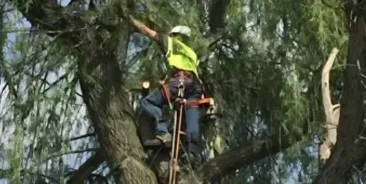
24/7 Emergency Tree Removal
When a winter storm drops a redwood across your driveway, a fire-weakened oak fails in your yard, or a limb is hanging over the bedroom, you need a crew that moves now. Our emergency teams answer 24 hours a day, 7 days a week, including weekends and holidays, throughout Santa Rosa, Healdsburg, Petaluma, Sebastopol, Windsor, Kenwood, and Guerneville.
We arrive ready to handle hazardous removals safely and quickly. We document damage for insurance, clear access, and eliminate the hazard completely before we leave.
- 24/7 emergency service, 365 days a year
- Storm repair and post-fire hazard removal
- Insurance billing handled directly, no cash up front
- Fast service across all of Sonoma County
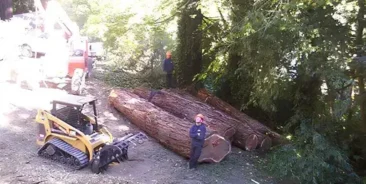
Tree Removal in Santa Rosa & Sonoma County
Dead trees, drought-stressed trees, fire-damaged trees, structurally compromised trees, and trees that have simply outgrown the space. We handle all of them. Every job starts before the first cut: full site assessment, risk identification, removal sequencing, and precise execution.
Our specialized equipment, including cranes, bucket trucks, and advanced rigging, lets us work in tight Santa Rosa neighborhoods, near hillside structures, close to power lines, and on the steep rural lots common across Sonoma County. Crane-assisted hazardous tree removals are a specialty, not an exception.
- Any size, any location, any difficulty
- Crane-assisted tree removal for large or hazardous trees
- Flat-rate pricing with our no-surprise guarantee
- Full debris removal and cleanup included
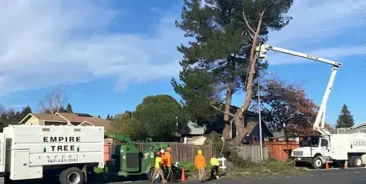
Tree Trimming Services
Tree trimming keeps your canopy in shape and pulls branches back from where they cause problems. Roofs, gutters, power lines, driveways, and walkways. It also clears out the deadwood that becomes a hazard the next time the wind picks up.
On Sonoma County properties, regular trimming does double duty. It opens sightlines, lets more light through, and cuts down on fire fuel sitting close to your home. Our crews work to a plan: identify the problem limbs, clear what needs clearing, shape the canopy without over-cutting.
- Clears branches away from roofs, gutters, and power lines
- Removes deadwood and hazard limbs before they fall
- Improves sightlines, light, and curb appeal
- Reduces fire fuel near structures and outbuildings

Tree Pruning Services
Pruning isn't the same as trimming. It's a health and structure call, and done right, it's one of the best things you can do for a tree long term. The point is to remove structural weaknesses before they fail in a winter storm, improve how the tree carries its weight, and encourage healthy growth through our long Sonoma County season.
Wrong cuts do more damage than no cuts at all, so timing, technique, and knowing the species matter. Our arborist-informed approach targets the specific branches and growth patterns putting your tree, or your property, at risk. We take what needs to go and leave the rest alone.
- Reduces risk of limb failure during winter storms
- Improves long-term tree structure and canopy health
- Residential, commercial, and vineyard properties
- Arborist available for consultation before pruning

Lot Clearing in Sonoma County
Preparing land for new construction, expanding a building envelope, reclaiming an overgrown rural lot, or clearing brush after a wet winter. We have the equipment to handle it efficiently. Projects from a single overgrown Santa Rosa lot to multi-acre rural clearing in the hills around Healdsburg and Kenwood.
We protect adjacent structures, fencing, and any vegetation you want preserved, and we haul all debris so the site is ready for what's next.
- Residential, commercial, and rural lot clearing
- Brush clearing for dense overgrowth
- All debris hauled, site left completely clear
- Construction-site prep and development clearing

Fire Abatement & Defensible Space Services
This is Sonoma County. Fire abatement isn't a side service for us. It's a core part of what we do. We help homeowners, ranches, and commercial properties meet California's defensible-space requirements (Zone 0, Zone 1, and Zone 2) under PRC 4291, reduce ladder fuels, remove fire-prone vegetation near structures, and harden the property against the next red-flag event.
We work with insurance inspections, Cal Fire requirements, and local fire district guidance, and we can pull permits when the project calls for them.
- Zone 0, 1, and 2 defensible-space clearing
- Ladder fuel reduction around homes and outbuildings
- Removal of fire-damaged and high-risk trees
- Coordination with insurance inspections and Cal Fire
- Permitting services available
About Us
About Empire Tree Experts
Empire Tree Experts is a family-owned, locally operated tree service based in Santa Rosa, California. Sixty years in business and over a hundred years of combined team experience have taught us a simple lesson: show up on time, bring the right equipment, do the work properly, and leave the property in better shape than you found it. That hasn’t changed across six decades, and it isn’t going to.
We’re not a franchise and we’re not a call center routing your job out to whoever picks up. When you call Empire Tree Experts, you’re talking to the people who will run the equipment, climb the tree, and stand behind the result.
We serve homeowners, commercial property owners, vineyards, and municipal clients throughout Santa Rosa, Healdsburg, Petaluma, Sebastopol, Windsor, Kenwood, and Guerneville.
Areas We Serve
Empire Tree Experts serves residential, commercial, and rural clients throughout Sonoma County. If you're not sure we cover your area, call and ask. We likely do.
Areas and communities We Serve:
Sonoma County Tree Regulations & California Resources
Tree removal, major trimming, and significant landscaping work in Santa Rosa and across Sonoma County may be subject to local ordinances, especially for heritage trees, oaks, riparian buffers, and trees near public rights-of-way. Defensible-space and fire abatement work has its own set of state and local requirements. Verify before proceeding.
City of Santa Rosa Planning & Tree Ordinance
Municipal tree protection ordinance, heritage tree designations, and removal permit requirements within Santa Rosa city limits.
Sonoma County Permit & Resource Management Department (Permit Sonoma)
Tree removal permits, zoning, and use-permit guidance for unincorporated Sonoma County.
Cal Fire Defensible Space (PRC 4291)
California state requirements for defensible space around homes in fire-prone areas, including Zone 0, Zone 1, and Zone 2 guidance.
International Society of Arboriculture (ISA)
Professional arborist standards, tree care education, and certification verification.
Tree Care Industry Association (TCIA)
Industry safety standards, accreditation, and best practices for professional tree service operations.
National Weather Service, San Francisco Bay Area Forecast Office
Storm warnings, wind advisories, and red-flag fire weather alerts affecting tree safety across Sonoma County.
Not sure whether your project needs a permit? Call us. We’ve worked through the local requirements across Sonoma County for decades and can point you in the right direction. Permitting services available.
Tree Insurance Coverage & Claims Assistance
Storm damage, fire damage, and hazardous tree failure are frequently covered events under California homeowners policies. Empire Tree Experts documents the damage, supports the claims process, and handles billing directly when applicable, so you focus on recovery instead of paperwork.
General Liability Insurance
Your property is protected in the unlikely event of accidental damage during service operations. Full coverage on every job, every day, across Sonoma County.Workers' Compensation Insurance
All crew members are fully covered while working on your property. You have zero liability exposure when Empire Tree Experts is on the job. Verified coverage, not a promise.Commercial Vehicle & Equipment Coverage
All service vehicles and equipment are properly insured and operate in full compliance with California state requirements.Insurance Claim Assistance
We document tree damage, provide written assessments, and support claims when applicable. We work directly with your insurance provider for covered storm and fire damage. No cash up front required.Recommended Trees for Sonoma County & the North Bay
Sonoma County’s Mediterranean climate, with dry summers, wet winters, periodic drought, and real wildfire pressure, calls for trees with deep roots, drought tolerance, and reasonable fire resistance. If you’re replanting after a removal, these are strong long-term choices for Santa Rosa and surrounding properties. The UC Cooperative Extension and CAL FIRE Urban Forestry program both publish solid local guidance.
Coast Live Oak (Quercus agrifolia)
Native, drought-tolerant, and structurally strong. One of the defining trees of the North Bay landscape.
Valley Oak (Quercus lobata)
Iconic California native, deep-rooted and long-lived. Excellent shade tree for larger properties.
Blue Oak (Quercus douglasii)
Highly drought-tolerant native, well suited to dry inland Sonoma County sites.
California Bay Laurel (Umbellularia californica)
Aromatic native with dense foliage, good for shade and habitat. Note: keep at distance from oaks due to Sudden Oak Death pathway.
Big Leaf Maple (Acer macrophyllum)
Native deciduous shade tree, thrives near seasonal creeks and shaded slopes.
Western Redbud (Cercis occidentalis)
Smaller native ornamental with spectacular spring color. Well suited to residential landscapes.
Coast Redwood (Sequoia sempervirens)
Iconic, fast-growing, and tolerant of coastal fog. Best on larger properties with adequate moisture.
Madrone (Arbutus menziesii)
Striking native evergreen with distinctive bark. Site-sensitive but rewarding when placed well.
Toyon (Heteromeles arbutifolia)
Native large shrub or small tree, drought-tolerant with brilliant winter berries.
Crape Myrtle (Lagerstroemia indica)
Non-native but well-adapted ornamental, drought-tolerant once established. Long bloom season.
How Sonoma County’s Climate Affects Your Trees, and How We Help
Santa Rosa and the broader Sonoma County region sit in a Mediterranean climate zone. Dry summers, wet winters, periodic drought years, atmospheric river events, and the ever-present reality of wildfire. Every season puts a specific kind of stress on your trees, and understanding the cycle helps you stay ahead of hazards before they turn into emergencies.
Santa Rosa, CA Seasonal Climate & Tree Risk Overview
| Month | Avg High (°F) | Avg Low (°F) | Avg Precipitation | Primary Tree Risk |
|---|---|---|---|---|
| January | 58° | 39° | 6.4″ | Saturated soil uprooting, winter storm wind |
| February | 62° | 41° | 5.9″ | Atmospheric river events, root loading |
| March | 66° | 42° | 4.2″ | Wind storms, post-winter structural fatigue |
| April | 71° | 44° | 1.9″ | Spring growth stress on weak limbs |
| May | 76° | 47° | 0.7″ | Onset of dry season, drought stress begins |
| June | 82° | 50° | 0.2″ | Heat stress, fire weather begins |
| July | 86° | 52° | 0.0″ | Peak drought stress, ladder fuel risk |
| August | 86° | 52° | 0.1″ | Peak fire weather, pest pressure |
| September | 85° | 50° | 0.3″ | Red-flag wind events, highest fire risk |
| October | 78° | 46° | 1.4″ | Diablo winds, fire risk continues |
| November | 67° | 41° | 3.5″ | First wet storms, weakened root systems |
| December | 58° | 38° | 5.8″ | Winter storms, saturated soil uprooting |
| Annual | 73° | 45° | ~30″ | Year-round monitoring recommended |
Key Risk Factors in Sonoma County Tree Health
Wildfire & Red-Flag Wind Events
Late summer and fall bring the most dangerous combination in Sonoma County: dry fuels, low humidity, and offshore Diablo winds. Defensible-space clearing, ladder fuel reduction, and removal of high-risk trees near structures are the single most effective steps a homeowner can take.
Winter Storms & Atmospheric Rivers
From November through March, Sonoma County can take heavy, sustained rainfall on already-saturated ground. Combined with winter wind, that’s when trees with weakened roots, structural defects, or untreated disease tend to fail. Proactive pruning and hazard assessment ahead of the wet season is the best defense.
Drought Stress
Multi-year drought cycles weaken even healthy native trees, reducing their structural integrity and making them more vulnerable to pests and disease. Drought-stressed trees often fail in the first heavy storm of the wet season.
Pest & Disease Pressure
Sudden Oak Death, bark beetles, and a range of fungal pathogens are persistent threats in Sonoma County’s oak and conifer canopy. Regular arborist inspection identifies infestations and disease progression before they escalate to full removal.
Why Sonoma County Chooses Empire Tree Experts
01.
No-Surprise Guarantee. What We Quote Is What You Pay.
Flat-rate pricing means you know the full cost before any work begins. No line items appearing after the job. No upcharges for difficulty. No end-of-day surprises. The number in writing is the number on the invoice.
02.
Workmanship Guarantee & Guaranteed Repairs
Every job is backed by a workmanship guarantee. If something isn't right after we leave, we come back and fix it at no cost to you. Parts and labor, first cut to final cleanup.
03.
On-Time Guarantee. Fast Service, Every Time.
When we schedule, we show up. Crews operate on clear timelines, communicate throughout the job, and respect your time and property. For emergencies, we respond as fast as the situation demands, 24/7.
04.
Hazardous Tree Removals & Specialized Equipment
We specialize in the removals other companies pass on. Cranes, bucket trucks, grapple trucks, and advanced rigging let us handle high-risk work near homes, power lines, and structures throughout Sonoma County.
05.
ISA & TCIA Memberships
Empire Tree Experts maintains memberships with the International Society of Arboriculture and the Tree Care Industry Association, the two recognized standards bodies in the field. Continuing education and current best practices are non-negotiable for our crew.
06.
Respectful of Property
Tree work means heavy equipment and large falling material. We plan every job to protect your lawn, driveway, fencing, and landscaping, and we clean up completely before leaving. Your property is a home, not a job site.
07.
Clear, Transparent & Prompt Communication
From the first call through the final walkthrough, you always know what's happening and why. No jargon, no delays, no wondering where the crew is.
08.
Licensed, Bonded & Insured
Full general liability insurance and workers' compensation coverage on every job. Your property is protected. Your liability exposure is zero. Certificates of insurance provided before work begins, just ask.
09.
5-Star Rated with Decades of Experience
Thousands of satisfied clients across Santa Rosa, Healdsburg, Petaluma, Sebastopol, and the rest of Sonoma County. Consistent 5-star ratings. References available on request.
10.
Eco-Friendly Practices
We minimize unnecessary removal, recommend preservation and treatment where possible, and manage all green waste responsibly. Chipped, hauled to processing, or repurposed where it makes sense.
11.
Military, Senior & First-Responder Discounts
We honor active-duty military, veterans, seniors, and first responders throughout Sonoma County. Ask about your discount when you call for a free estimate.
TESTIMONIALS
What Our Clients Say
“Excellent, professional and quality tree work. The large crew took the tree down quickly and with professional ease. My stump was ground and the large chunks of wood nicely sat aside to dry for future use. I highly recommend Empire Tree Experts!”
“Lucas at Empire Tree Experts is considered family. He has done amazing work across our properties for over 22 years. Salt of the earth, great professional completion on every job and always leaves the property spotless. He has a great crew and we cannot elaborate how grateful we are. 5+ stars”
“Great company! Great work done at my house. Lucas was nice to work with. I will definitely be recommending them to friends and family.”
“I would highly recommend hiring this company. They did an excellent job trimming two trees and removing three others. They were professional, knowledgeable and made sure I was satisfied before they left. They were efficient and left no trace of branches or debris in my yard or driveway.”
“Recently hired Empire Tree Experts to take down some big bays on my property due to fire danger and also trim a redwood. I’ve used other tree companies in the past but will only use Empire Tree Experts going forward. They were timely and efficient and reasonably priced. Excellent experience.”
You Can Trust The Experts
At Empire Tree Experts

Frequently Asked Questions
Frequently Asked Questions About Tree Service in Santa Rosa, CA
The cost depends on the tree's size, location, proximity to your home or other structures, and the difficulty of removal. A straightforward removal in an open yard costs less than a large hazardous tree within feet of your roof requiring crane-assisted work. We use flat-rate pricing, so what we quote is what you pay. No surprises. Call for a free estimate and you'll have a firm number before any work begins.
Yes. Our emergency crews are available around the clock, 365 days a year. If you have a fallen tree, storm-damaged limb, or an immediate hazard on your property right now, call 707-625-7444. Fast emergency response is part of our core operation, not a marketing line.
Yes, and it's one of our specialties. We handle Zone 0, Zone 1, and Zone 2 clearing under California's PRC 4291 defensible-space requirements, ladder fuel reduction, removal of fire-damaged trees, and coordination with insurance inspections. We can pull permits when the project requires them.
Common warning signs include large dead or hanging branches, visible cracks or splits in the trunk, trees leaning toward a structure, significant root damage or heaving, fungal growth at the base, and widespread disease or pest infestation throughout the canopy. Drought stress and fire damage are particular concerns in Sonoma County. Not every damaged tree needs to come down. Sometimes pruning or treatment is the right answer. Our arborist can assess your tree and give you an honest recommendation either way.
Yes. Empire Tree Experts is fully licensed, bonded, and insured for tree service operations in California. We carry general liability insurance and workers' compensation coverage on every job. You have zero liability exposure when our crew is on your property. We're happy to provide certificates of insurance before work begins, just ask.
Yes. For storm damage, fire damage, and other covered tree incidents, we handle billing directly with your insurance provider. We document the damage, provide written assessments, and work with your adjuster. No cash up front required for covered work. Call us as soon as the damage occurs so documentation starts while the evidence is fresh.
Yes. Hazardous and large-scale tree removals near structures are a specialty. Using crane-assisted removal, advanced rigging, and precision cutting techniques, we work within feet of homes, fences, and driveways every day. We plan each job carefully and protect your property throughout the process. We serve all of Sonoma County including Santa Rosa, Healdsburg, Petaluma, Sebastopol, Windsor, Kenwood, and Guerneville.